On Thursday, January 20, 2022 we hosted a special bonus event in Conn Maciel Carey’s 2022 OSHA Webinar Series in the form of a panel webinar program regarding OSHA COVID-19 Regulation and Enforcement After the Supreme Court Stayed the Vaccinate-or-Test ETS.
Presented by
Conn Maciel Carey LLP with Special Guests
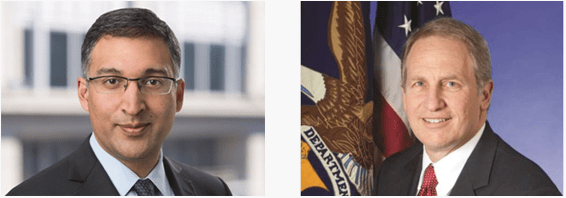
Neal Katyal and Jordan Barab
In this exclusive, bonus program we facilitated a panel discussion regarding the Supreme Court’s recent decision to stay OSHA’s Vaccinate-or-Test emergency temporary standard, what that decision means for employers in fed OSHA and State OSH Plan states, and how OSHA will address the COVID-19 hazard in the workplace moving forward.
We would like to extend our gratitude to our remarkable cast of panelists for participating in this event:
- Neal Katyal – former Acting Solicitor General of the United States and leading Constitutional Law expert; Partner at Hogan Lovells and Professor of Law at Georgetown University Law Center
- Jordan Barab – President Obama’s Deputy Assistant Secretary of Labor for OSHA and Acting Head of OSHA; former Sr. Policy Advisor to the US House Education and Labor Committee
- Moderated by Eric J. Conn, Chair, Conn Maciel Carey LLP’s national OSHA Practice Group
 The Supreme Court has spoken, and OSHA’s Vaccination, Testing and Face Coverings Emergency Temporary Standard is once again subject to a nationwide judicial stay. The conservative majority on the Court reasoned that the 50-year old OSH Act does not include an explicit-enough delegation of authority from the US Congress for OSHA to issue a regulation that addresses an issue that is not unique to the workplace and which is of such great economic and social significance. Shortly after the Supreme Court issued its decision, Secretary of Labor Marty Walsh announced that “OSHA will do everything in its existing authority to hold businesses accountable for protecting workers, including under the COVID-19 National Emphasis Program and General Duty Clause.”
So, the big question facing employers now is what are the potential regulatory pitfalls from unwinding or stopping the implementation of any of their COVID-19 prevention and/or vaccination policies developed either in response to OSHA’s Vaccinate-or-Test ETS or more general efforts to keep up with CDC recommendations and/or protect against OSHA General Duty Clause citations? Or said another way, without the COVID-19 emergency standards, what does OSHA expect from employers on the COVID-19 front to avoid enforcement?
Our panel of experts reviewed: Continue reading
