Finally We Have a Labor Secretary – Alexander Acosta

By Lindsay A. Disalvo

On Thursday, April 27, 2017, Alexander Acosta was confirmed by the United States Senate to serve as the first Secretary of Labor in the Trump Administration.  As we reported in an earlier article when Acosta was first nominated by Pres. Trump, in this role, Sec. Acosta will oversee the federal department that develops and interprets labor regulations and investigates alleged violations of minimum wage, overtime, and workplace safety laws and regulations.

The Senate approved Acosta by a vote of 60-38, meaning there was some cross-party support, despite the party-line vote on Acosta’s nomination by the Senate Health, Education, Labor and Pensions Committee.  This marks the fourth time Acosta has been confirmed by the Senate, including his prior positions in the Bush Administration.

Specifically, during the Bush Administration, Acosta served as a member of the National Labor Relations Board for approximately eight months.  In 2003, President Bush appointed him to Head the Civil Rights Division at the U.S. Department of Justice’s , a position which he held for about two years, before being appointed to serve as the United States Attorney for the Southern District of Florida.  Most recently, Acosta was the Dean of Florida International University’s School of Law.

At this point, it is still uncertain what jurisprudence Acosta will bring to the role of Secretary of Labor.  The Trump Administration and its initial Secretary of Labor nominee, Andrew Puzder, who withdrew from consideration back in February, have taken aggressive stands on deregulationHowever, Acosta’s positions on regulation and enforcement have not been as clearly expressed, and his prior experience as a prosecutor may suggest a more measured approach in managing the enforcement responsibilities of the various agencies under his direction.  We will have a better idea of Acosta’s approach soon, however, because there are a number of time sensitive issues that will need his prompt attention upon being sworn in.

In particular, we expect that one immediate priority for Acosta will be Continue reading

New Cal/OSHA Issues that California Employers Must Understand [Webinar Recording]

On April 11th, Andrew J. Sommer and Eric J. Conn of Conn Maciel Carey’s national OSHA Practice Group presented a webinar regarding “New Cal/OSHA Issues that California Employers Must Understand.” 

The state of California’s Division of Occupational Safety and Health (DOSH), better known as Cal/OSHA, is perhaps the most aggressive and enforcement-heavy approved state OSH Program in the nation.  California employers face a host of requirements that other employers around the country do not.  Likewise, the Cal/OSHA inspection and appeal process creates several unique landmines for California employers.

In light of new Cal/OSHA standards taking effect in 2017 and others on the horizon, this is the perfect time for companies doing business in the Golden State to revamp their safety programs and take necessary steps to ensure compliance with the latest Cal/OSHA safety regulations.

Participants in this complimentary webinar learned about the following:

  • Cal/OSHA’s New Repeat Violation Rule
  • Cal/OSHA’s New Workplace Violence Rule for Health Care Facilities
  • New Law Mandating the Development of Heat Illness Prevention Regulations for Indoor Workplaces
  • Changes to Cal/OSHA Penalties on the Horizon
  • Other Industry Specific Developments

Here is a link to the recording of the webinar. Continue reading

Trump Proposes $2.5B Cut to Dept. of Labor’s Budget and Elimination of Chemical Safety Board

By Kara M. Maciel and Eric J. Conn

The Trump Administration submitted a blueprint budget for 2018 to Congress proposing $2.5 Billion in cuts to the U.S. Department of Labor’s (“DOL”) operating budget.  The President’s proposed budget expressly calls for reduced funding for grant programs, job training programs for seniors and disadvantaged youth, and support for international labor efforts.  It also proposes to entirely defund and eliminate the U.S. Chemical Safety and Hazard Investigation Board (“CSB”) – an independent, federal, non-enforcement agency that investigates chemical accidents at fixed facilities.  The budget plan also purports to shift more funding responsibility to the states with labor related programs.  Finally, although less explicit, the budget blueprint appears to deliver on promises from Trump’s campaign trail that rulemaking and regulatory enforcement efforts under the myriad laws and regulations enforced by the sub-agencies, such as the Wage and Hour Division and OSHA would be slashed.

These proposed budget cuts at DOL and other agencies are all part of a plan to offset the White House’s intent to increase defense and security spending by $54 billion.  Overall, Trump requested $1.065 Trillion in total discretionary spending, with $603 billion going to Defense.

The proposal would shrink DOL’s budget to $9.6 Billion – down 21% from the $12.2 Billion budget for 2017. Trump’s planned reductions announced on March 16, 2017 – while not really surprising in the context of his view toward federal spending on non-defense agencies – would have a seismic impact on DOL’s ability to carry out both policy initiatives under former President Obama as well as many of the Department’s longstanding programs.

The business community welcomes Trump’s effort to rein in what has been viewed as an intrusive, enforcement-heavy Labor Department, but we caution not to count chickens yet. These proposed cuts will undergo heavy scrutiny by Congress before any budget is finalized. The President’s spending plan is only the first step in months of negotiations between the White House and both houses (and parties) in Congress. Pres. Trump will put forward a more detailed spending proposal in May, and various legislative committees will scrutinize his requests, calling on Cabinet Secretaries, Agency Heads, and others in the Administration to testify about or otherwise explain their spending needs and requests.

Key Takeaways from Trump’s Budget Blueprint

While the administration provided estimates for some of the proposed cuts, it did not specify where the majority of the budget cuts would come from.  What we do know is that the proposed budget would Continue reading

Pres. Trump’s Plan B for Secretary of Labor Nominee – Alex Acosta

By Jordan B. Schwartz

President Trump originally chose Andrew Puzder, the CEO of CKE Holdings, the parent company of Carl’s Jr. and Hardee’s, as his nominee for Secretary of Labor.Department of Labor  However, on February 15, 2017, one day prior to his much-delayed confirmation hearing, Mr. Puzder withdrew his name from consideration amidst reports that he would not receive the required Senate votes necessary for confirmation.  Mr. Puzder’s nomination was knocked off track by allegations that he failed to pay workers overtime pay, hired an undocumented worker in his home, condoned sexual harassment, and opposed legislative efforts to address those problems.  The next day, President Trump officially tapped former U.S. Attorney Alex Acosta for the position.

If confirmed as Labor Secretary, Mr. Acosta will oversee the federal apparatus that investigates violations of minimum wage, overtime and workplace safety laws and regulations.  Mr. Acosta would also be the first Hispanic member of President Trump’s cabinet.

Mr. Acosta has a strong public service background.  After graduating from Harvard Law School, he clerked for Judge (now Supreme Court Justice) Samuel Alito on the Third Circuit Court of Appeals.  He has also served as a member of the National Labor Relations Board, head of the U.S. Department of Justice’s Civil Rights Division (both of which he was appointed to by President George W. Bush), and U.S. Attorney for the Southern District of Florida.  Most recently, Mr. Acosta served as

Continue reading

Trump’s Supreme Court Nominee Neil Gorsuch Sides with Businesses on Labor and OSHA Issues

On February 1, 2017, President Trump nominated Neil Gorsuch, a judge on the U.S. Court of Appeals for the Tenth Circuit in Denver, Colorado, to fill the vacancy on the Supreme Court left by Antonin Scalia’s death in February 2016.  Indeed, since February 2016, the High Court has functioned with only eight members; four liberal Justices and four conservative Justices.  gorsuch-imageTherefore, the confirmation of a ninth Justice to fill the vacant position, and establish a majority conservative bench, is likely to have a substantial impact on the outcome of controversial issues brought before the Court.
Gorsuch was appointed to the Tenth Circuit by President George W. Bush in 2006.  Although he is considered a firm conservative, as was expected given President Trump’s public stance to fill the vacancy with a judge who embodies Scalia’s principles, he has garnered praise from both liberals and conservatives for his work as an appellate judge due to his reputation for conveying his ideas fluently and courteously.

A number of Democrats have already conveyed their opposition to Gorsuch’s nomination, which could prove problematic as he will need to win over some Democratic senators to get the 60 votes needed to clear procedural hurdles.However, setting the political climate aside, when Judge Gorsuch was appointed to the Tenth Circuit in 2006, he was confirmed by the Senatewithout objection.  Only time will tell if Judge Gorsuch will acquire enough support from Senate Democrats to overcome a filibuster given the immediate public opposition from Democrats following Gorsuch’s nomination, and whether he will be approved in time to hear oral arguments later this spring.  Judge Gorsuch’s opinions on labor and employment topics suggest that he favors businesses, and his decisions reflect a distaste for overreaching agency action which could result in some limiting decisions if he is ultimately confirmed.

Who is Judge Gorsuch?

Prior to being appointed to the Tenth Circuit, Judge Gorsuch amassed an impressive resume.  He received his undergraduate degree from Columbia University in New York City in 1988 and his law degree from Harvard Law School, with honors, in 1991 where he was the editor of the Harvard Journal of Law & Public Policy and classmates with former President Obama. Judge Gorsuch also earned a doctorate of legal philosophy from Oxford University in 2004, where he studied as a Marshall Scholar.  Judge Gorsuch began his law career as a

Continue reading

OSHA and Employment in the Workplace Bathroom: Transgender, ADA, Sanitation and Accessibility Issues

By Jordan B. Schwartz and Eric J. Conn

OSHA has long enforced sanitation and accessibility standards for restrooms for workers – an idea that generally makes sense viewed as a health concern.  In the last few years, however, new policies at the state and federal levels on transgender issues mean all employers must pay particular attention to rules and enforcement regarding access to restrooms.bathroom

Indeed, OSHA has now found a way into the highly political and social issue of transgender equality by making its own policy pronouncements on access by workers to restrooms of the gender with which they identify.  In 2015, Assistant Secretary of Labor for OSHA Dr. David Michaels explained the Agency’s position on this when he unveiled a new OSHA Guide to Restroom Access for Transgender Workers, he said:

“The core principle is that all employees, including transgender employees, should have access to restrooms that correspond to their gender identity.”

The emergence of bathroom issues from a legal and regulatory standpoint is not limited to the controversial transgender issue.  This article addresses the complexities of this subject and how it affects regulatory compliance and employment law liabilities.

OSHA Bathroom Requirements

In terms of bathroom access, there are two OSHA concerns primarily at play (aside from the new transgender issue), which often overlap:

  1. providing employees with prompt access to a bathroom; and
  2. ensuring the workplace bathroom is maintained in a sanitary condition.

Toilets must be provided and accessible to all employees at every fixed work site. This means Continue reading

Trump Taps Fast Food CEO Andrew Puzder for Sec. of Labor: Seismic Shift Coming to DOL Regulatory Agenda

By Andrew J. Sommer and Lindsay A. DiSalvo

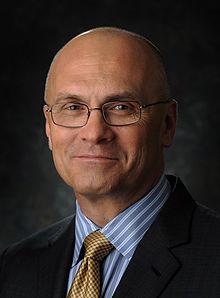
President-elect Donald Trump has chosen Andrew Franklin “Andy” Puzder to nominate as his Secretary of Labor, according to Trump’s transition team.  Mr. Puzder is the CEO of CKE Holdings, the parent company of Hardee’s and Carl’s Jr.  He has been a vocal critic of the Obama Labor Department’s overtime regulations and efforts to increase the federal minimum wage. puzderAs Labor Secretary, Mr. Puzder will oversee the federal apparatus that investigates violations of minimum wage, overtime and workplace safety laws and regulations.

Puzder on Wage and Hour Issues

An increase in the federal minimum wage and an expansion in overtime eligibility have been priorities for the outgoing Secretary of Labor Thomas Perez.  On Sec. Perez’s watch, the Department of Labor has issued new overtime regulations increasing the minimum salary threshold level in order to qualify an employee as exempt from overtime.  Mr. Puzder denounced this new overtime rule.  In an op-ed piece earlier this year in Forbes, Puzder said:

“[the overtime regulation] will add to the extensive regulatory maze the Obama Administration has imposed on employers, forcing many to offset increased labor expense by cutting costs elsewhere. . . .  [This cost cutting would result in reduced opportunities, bonuses, benefits and promotions.]”

The status of the new overtime rule is presently uncertain after a Texas federal court temporarily blocked the rule from taking effect.  The U.S. Court of Appeals for the Fifth Circuit has just granted the Department of Labor’s request to expedite the appeal from that preliminary injunction order, but that appeal is unlikely to be decided before Trump is inaugurated as the next president on January 20, 2017.  Accordingly, under Mr. Puzder’s leadership, the DOL could very well withdraw the pending appeal before a decision is issued by the Fifth Circuit, and otherwise not support the new overtime rule. Even if the overtime rule eventually takes effect, Puzder’s arsenal will include the authority to engage in rulemaking to roll back or modify the overtime rule, consistent with the notice and comment process under the federal Administrative Procedures Act.

Other immediate measures Puzder could take to shift or reverse the direction of the Obama DOL would be to Continue reading

Bathroom Break: OSHA Bathroom Issues, ADA Accessibility, and Transgender Bathrooms [Webinar Recording]

On December 13, 2016, Eric J. Conn and Jordan Schwartz of Conn Maciel Carey’s national Labor and Employment and OSHA Practices, for a complimentary webinar regarding Employee Access to Sanitary Bathrooms, ADA Accessibility, and Transgender Bathrooms. bathroom-webinar-cover-slide

Although not historically a hotbed of OSHA / Employment law activity, access to bathrooms by both employees and members of the public has become a high profile issue of late.  OSHA has always required employers to provide employees with prompt access to sanitary toilet facilities, to minimize adverse health risks.  Recently, however, OSHA and other federal, state and local authorities began to prohibit discriminatory practices with regard to restroom access based on the principle that individuals have the right to use facilities consistent with their gender identity.  There are also a host of requirements under the Americans with Disabilities Act that must be met for a bathroom to be considered accessible and usable by an individual with a disability.  This webinar reviewed the requirements in these areas, and provided specific strategies to address this new and complex area of the law.

Participants in this complimentary webinar learned about the following:

  • OSHA rules regarding accessibility to bathroom facilities and sanitation issues
  • Transgender workplace obligations
  • Federal Agency Interpretations of Title VII to include discrimination based on gender identity or transgender status
  • State laws regarding discriminatory practices in regard to restroom access
  • Best practices for overcoming typical bathroom ADA accessibility issues

Here is a link to recording of the webinar.  If you missed Continue reading

FAR Council’s and Dept. of Labor’s Contractor “Blacklisting” Rule – Finalized and Promptly Stayed

By Eric J. Conn, Chair of Conn Maciel Carey’s national OSHA Practice

Texas District Court Enjoins the Administration from Enforcing the Federal Government Contractor “Blacklisting” Provisions of the Federal Acquisition Regulatory Council’s New Final “Fair Pay and Safe Workplaces” Rule.

On August 25, 2016, the Obama Administration, through the Federal Acquisition Regulatory (FAR) Council and in conjunction with the U.S. Department of Labor, promulgated the final Fair Pay and Safe Workplaces regulation and parallel guidance from the Labor Department, which collectively federal contractors have unaffectionately dubbed the “Blacklisting Rule.”  far-article-1The cornerstone provisions of the final rule establish expansive new reporting obligations for contractors bidding on executive branch contracts with an estimated value exceeding $500,000. These contractors, along with subcontractors whose portions of the overall contract meet the $500,000 threshold contract value, must disclose all confirmed and alleged violations issued under 14 labor laws, including alleged OSHA citations, within the three years prior to a prospective contractor’s bid submission, regardless of the status of the citation or whether the citation has yet been upheld in a judicial or administrative review process afforded employers.  To be clear, under the final rule, all OSHA citations must be reported, even minor paperwork citations characterized as “OTS” (“other-than-serious”).

The final rule change the manner in which the rule applies to subcontractors.  Unlike the proposed rule, the final rule requires covered subcontractors to disclose violations directly to the Department of Labor, which will conduct a “responsibility determination” and return it to the subcontractor, who in turn will then be required to deliver it to the prime contractor.  The final rule also pushed back the mandatory disclosure date for subcontractors to October 25, 2017, a year after the disclosure requirements were set to begin for prime contractors.

The disclosure requirements for all contractors apply equally to related state labor laws, which sweeps in all citations issued under the 27 federal OSHA-approved state OSH programs administered by state occupational safety and health agencies such as CAL/OSHA.  Whichever contractor is awarded a covered contract must also disclose any old and new OSHA or other alleged labor law violation (referred to in the regulation as “administrative merits determinations”) during regular, bi-annual reports throughout the life of the contract.

Rule Challenged and Preliminary Injunction Granted

Barely before contractors had time to read the regulation and attendant DOL guidance, however, and prior to its first effective date of October 25th, a group of industry trade associations filed a legal challenge in a Texas federal district court to the rule and requested the court grant emergency relief by Continue reading

Clinton or Trump? The Future of Employment Law and Workplace Safety Regulation

By Kara M. Maciel, Eric J. Conn and Nick W. Scala

What has evolved (or devolved) into perhaps the most controversial election in American history, could translate in a couple of months into a whirlwind for labor and workplace safety policy. Stark differences between the major candidates promise either an onward march for Obama-era rules and enforcement philosophy, or a sudden rollback of the Obama Administration’s aggressive regulatory and enforcement agenda.

How this election turns out will have lasting consequences for a range of labor initiatives and policies, many of which have led to some of the Obama Administration’s most heated policy debates. These range from forcing disclosure of so called “persuaders” involved in union organizing to a publicelection-webinar-cover-slide shaming campaign seeking to put employers’ safety data online.

As we discussed during a recent Conn Maciel Carey webinar, the results on Nov. 8th will have a huge impact on how the Labor Department proceeds with both new regulations and enforcement policies. Everything from Wage and Hour to OSHA and MSHA will be affected – and stakeholders will feel the differences quickly regardless who wins the election.

On most issues, a Clinton win would cement what the Labor agencies under Obama view as their mandate to keep issuing tougher rules on behalf of workers and unions. Generally, an election of Trump means DOL will scrap the lion’s share of its current agenda, and begin to repeal regulations finalized over Obama’s two terms, since his economic plan relies heavily on easing regulatory burdens on businesses. Continue reading

[Webinar] OSHA, Labor & Employment, and MSHA Impacts of the Upcoming Presidential Election

On Tuesday, October 25, 2016 at 1 PM Eastern, join Eric J. Conn, Kara M. Maciel and Nick W. Scala of Conn Maciel Carey’s national Labor and Employment Practice and Workplace Safety Practice, for a complimentary webinar regarding the OSHA, Labor & Employment, and MSHA Impacts of the Upcoming Presidential Election. election-webinar-cover-slide

In just a few weeks, we will have the opportunity to enter the voting booth, and cast a ballot to elect the next President of the United States.  The platforms and proposed polices of the candidates are more divergent than ever.  The outcome of this election will significantly impact this country’s future with respect to healthcare, military actions, economic policy, and of course, workplace challenges, like union organizing, and occupational safety and health regulation and enforcement.  This webinar will discuss the public positions taken by both candidates about labor employment subjects and safety and health enforcement and rulemaking, and the likely impacts depending on which candidate takes the White House.

Here is a link to register for this webinar.  If you missed Continue reading

Employment Law and OSHA Concerns with Temps, Contractors, and Joint- and Multi- Employer Sites

By Eric J. Conn, Jordan B. Schwartz, and Lindsay A. Smith

Employers must beware as the U.S. Department of Labor (“DOL”) cracks down on what it perceives as rampant misclassifying employees as contractors and shirking other responsibilities, such as safety training, because a worker is supplied by another employer.  With more and more unique employment relationships and multi-employer worksites, it is crucial to understand the complexities of how the DOL and its various enforcement agencies define the employment relationship and/or assign liability in these contexts.

It has long been a priority of the Obama Administration to treat more workers as actual employees of host employers in order to provide them with a litany of labor protections and benefits, even when these workers are not hired directly, may not stay long, and may not even consider themselves to be employees.  This enforcement philosophy affects businesses in numerous areas – such as wage and hour law and OSHA compliance – even when employers thought staffing through an agency or on an independent contract basis relieved them of many of these DOL burdens and liabilities.  Not only does this increase the cost of many temporary, contract and multi-employer arrangements, it also puts employers at great risk of costly DOL enforcement actions if they do not understand when they have the responsibility (as opposed to another employer) to satisfy certain terms of labor law compliance.

First and foremost to keep in mind, although an employer may classify a worker as an independent contractor or as a non-employee temporary worker, and their maybe contract documents that express that classification, that does not mean DOL takes the same view.  Indeed, as DOL sees it, most workers should be treated as employees.  Also, employers may have certain employment law and OSHA-related obligations and potential liability even for non-employees depending on the employers’ roles at multi-employer worksites or in joint-employer situations.

New ‘Joint Employer’ Standard

Outsourcing to a temporary or contract worker can be a great way for a company to take care of some tasks and may make more sense for the business, rather than hiring full-time workers to fill those gaps.  However, if the DOL finds under one of various legal tests that the business is a joint-employer of that worker with another company, then numerous legal obligations kick in vis-a-vis these shared employees (such as collective bargaining and mandatory dispute resolution) as well as significant exposure for your organization under various labor laws.

In the past few years, both state and federal agencies have been expanding the joint-employer definition. Continue reading

OSHA’s Anti-Retaliation Recordkeeping Rule: Assault on Pizza Parties, Drug Tests and Exec Compensation

By Eric J. Conn and Dan C. Deacon of Conn Maciel Carey PLLC

OSHA’s recent Injury and Illness Recordkeeping reform has created quite a stir for employers.  As we discussed in an earlier article about the new Recordkeeping rule, OSHA now requires employers to electronically submit to OSHA their injury and illness recordkeeping data.  OSHA will, in turn, publish the data online for all the world to dissect.  It turns out, however, RK Rule FRthe electronic recordkeeping data submission elements of the new rule may not be the most problematic for employers.

The new Recordkeeping rule also increases employers’ obligations to implement “reasonable reporting” procedures for employees to report to their employers the work related injuries they incur, and expands OSHA’s enforcement authority by introducing a vague new set of anti-retaliation provisions.  To date, employers have seen little guidance about what OSHA means by reasonable reporting procedures or what types of policies may violate the new anti-retaliation provisions.

Particularly controversial is the impact of OSHA’s new rule on employers’ policies for post-injury drug testing, safety incentive programs, and executive compensation and bonuses.  Although none of those words appear in the amended Recordkeeping regulation, OSHA addressed each in the Preamble to the Final Rule.

These topics have been on OSHA’s radar for nearly a decade, dating back to a 2008 Report issued by the House of Representative Committee on Education and Labor entitled “Hidden Tragedy: Underreporting of Workplace Injuries and Illnesses.”  From that time, OSHA has been making efforts to address a perceived culture of underreporting injuries and retaliation against employees who do report workplace injuries and illnesses. OSHA has used every tool at its disposal to chip away at employer policies and practices that purportedly discriminate against employees who report injuries, or that attempt to deter employees from reporting injuries in the first place.

Even before this rulemaking, OSHA has taken action against policies that OSHA believes discourage reporting or recording of work related injuries.  For example, Continue reading

BEWARE OSHA Phishing Scam Email

Employers should be cautious of an email that has been circulating to numerous employers around the country that appears on its face to be a request from OSHA to download a guidance document about “Safety & Health at U.S.: Protecting Workers and Employers” in order to avoid being fined.

Phishing Scam Email

The email, which is not sent from a Department of Labor (“DOL”) email address, contains a newsletter clipping that has both the DOL and the Department of Health and Human Services (“DHHS”) logos at the top. It claims that the recipient employers have been selected in a database to receive this guidance document, and that they will receive “an unannounced, onsite inspection” to investigate whether they are meeting Safety & Health Requirements.

OSHA has confirmed that this email was not sent by the Agency.  Employers should NOT click on any of the links in the email, should immediately delete it, and should run a virus scan.  It is believed to be a phishing scam similar to ones that have plagued employers in the past.  OSHA states that it will investigate and potentially refer the matter to the Department of Justice for a criminal investigation.

Using OSHA as a front to trick employers has been a ploy scam artists have used in the past. For example, Continue reading

The Freedom of Information Act Amended: Process and Pitfalls

On June 30, 2016, President Obama signed into law the FOIA Improvement Act of 2016, Pub. L. No. 114-185, which made significant changes to the Freedom of Information Act, 5 U.S.C. § 552, et seq. (“FOIA”).FOIA Act FOIA can be a great tool for unlocking the federal government’s vast compilations of documents and information, which make it a great resource for business intelligence. But you also should be aware of FOIA’s pitfalls, including how your own business’s confidential documents and information can be disclosed to the public, including the media, if the federal government has them in its possession and they become subject to a FOIA request.

FOIA was enacted in 1966 and allows any member of the public to request access to government information without requiring a showing of a need or reason for seeking the information. FOIA was a revision of the Administrative Procedure Act, 5 U.S.C. § 551, et seq. (“APA”). Congress saw that the APA was falling short of its original disclosure goals and that the original law came to be viewed more as a withholding statute than a disclosure statute. See EPA v. Mink, 410 U.S. 73, 79 (1973). Congress’s intent in enacting FOIA was to make the government’s records and activities available and transparent to the public with only a handful of express exemptions that the government could invoke to withhold documents and information from disclosure. Generally the exemptions prevent disclosure of information related to national security, law enforcement investigations, government personnel rules and practices, specific exemptions from other statutes, and trade secret, commercial, or financial information obtained from third parties such as individuals and businesses.

The federal government is a huge Continue reading

OSHA, EEOC and the Dept. of Justice Weigh In On Transgender Rights in the Workplace

In the last few months, hardly a day has gone by without some news regarding transgender bathroom access.  Perhaps the catalyst for the increased attention on this issue was North Carolina’s passage of its controversial H.B. 2 law which, among other things, restricts transgender people’s access to public restrooms and blocks local governments from passing NC Bathroom Lawanti-discrimination laws to protect LGBT individuals.

Notably, the American Civil Liberties Union (“ACLU”) has since filed a lawsuit in federal court challenging that law, and seeking an injunction preventing the State from enforcing it.  On May 4, 2016, the U.S. Department of Justice sent a letter to North Carolina Governor Pat McCrory saying the state’s controversial law restricting bathroom access for transgender persons is in violation of federal civil rights laws prohibiting employment discrimination.

The ACLU has also successfully challenged other entities that it believed were infringing on transgender rights.  For example, the U.S. Court of Appeals for the Fourth Circuit recently sided with the ACLU and ruled that a transgender high school student who was born as a female but was barred from using the boys’ bathroom can sue his school board for discrimination.  In that case, the Fourth Circuit accepted the federal government’s interpretation of discrimination as including discrimination against transgender individuals and thus deferred to the U.S. Education Department’s position that transgender students should have access to the bathrooms that match their gender identities, rather than being forced to use bathrooms that match their biological sex.OSHA Bathroom Image

As a byproduct of the increasing visibility of this issue, both the U.S. Equal Employment Opportunity Commission (“EEOC”) and Occupational Safety and Health Administration (“OSHA”) have strongly supported transgender rights.  Indeed, last year, OSHA promulgated its “Transgender Restroom Access Guide” with the core Principle that all employees, including transgender employees, should have access to restrooms that correspond to their gender identity.  OSHA linked this to safety and health by reasoning that:

Continue reading

California “Suitable Seating” – the Legal and Ergonomics Landscape [Webinar Recording]

On Tuesday, May 3, 2016, Andrew J. Sommer (employment law partner at Conn Maciel Carey) and Brandy Ware (PhD Ergonomist and Principal at JFAssociates) presented a webinar about the legal and practical implications of California’s “Suitable Seating” law and litigation landscape.

In advance of the webinar, the employment attorneys at Conn Maciel Carey and the Ergonomics Experts at JFAssociates co-authored a detailed article about the California Supreme Court’s new, significant opinion that changed the landscape of California’s suitable seating in the workplace requirements.  Specifically, the new ruling places the question of whether the “nature of the work reasonably permits the use of seats” squarely at the center of a new cottage industry of class and collective action lawsuits in California.

This joint webinar by Conn Maciel Carey’s Employment Law Practice and the leading ergonomics experts at JFAssociates reviewed:

  1. The California legislation that mandates suitable seating;
  2. The First wave of law suits invoking the suitable seating requirements;
  3. The California Supreme Court’s recent decision and what it means for the future of suitable seating cases; and
  4. Practical and expert witness strategies to avoid and defend against suitable seating law suits.

Here is a link to a recording of the joint suitable seating webinar.

Article: California Supreme Court Ruling on Suitable Seating: Legal and Ergonomics Perspectives

By Andrew J. Sommer, Esq. and Brandy Farris Ware, PhD, CPE, CSSBB

A recent California Supreme Court ruling provides crucial new guidance on how courts should weigh the evidence in so-called “suitable seating” cases, which employee litigants are bringing under the state requirement that employers provide seats to workers where the nature of their work “reasonably permits” the use of seating.

This is a key emerging issue for the Golden State’s business community, with a new cottage industry of lawsuits stemming from a state appellate court decision several years ago allowing “suitable seating” litigation under the California Private Attorney General Act (PAGA). The ruling encouraged new lawsuits because penalties as well as attorney’s fees and costs may be awarded under PAGA.

The California Supreme Court handed down an opinion April 4, 2016 in response to questions posed by two federal lawsuits, setting out new ground rules for what actually constitutes “suitable seating” under the law. Suitable SeatingEmployers with locations in California are well-advised to evaluate their work environments in light of these latest developments and consider the need for workplace safety experts to assess their individual circumstances. Not only can such evaluations, based on the new Supreme Court guidance, help employers head off litigation (or at least reach a favorable outcome if sued), they also can lower other risk factors and costs like worker’s compensation.
The Court adopted a fact-based approach that depends not on the entire job, but on Continue reading

“Whistleblower Investigations – OSHA’s 11(c), Title VII, and other Statutes” [Webinar Recording]

On Wednesday, April 19, 2016, Kara M. Maciel and Jordan B. Schwartz delivered a webinar regarding OSHA Whistleblower Investigations as part of the Firm’s 2016 OSHA Webinar Series.

A host of federal and state laws include provisions prohibiting employers from retaliating against whistleblowers who engage in activities protected by the statute.  The Occupational Safety and Health Act, Title VII of the Civil Rights Act, and several other laws that regulate the relationship between employers and employees, contain such whistleblower protections.  Pursuant to these protections, the laws also provide a mechanism through which employees can report incidents of retaliation to the government to investigate and potentially bring an enforcement action against the employer.  With the number of whistleblower claims continuing to rise in 2015, it is imperative for employers to understand what types of actions could be the impetus for a whistleblower investigation and the potential consequences.

Participants in the webinar learned the following: Continue reading

Pres. Obama Announces Nominee to S.Ct. – A Moderate on Labor and Worker Safety

By Kara M. Maciel and Eric J. Conn

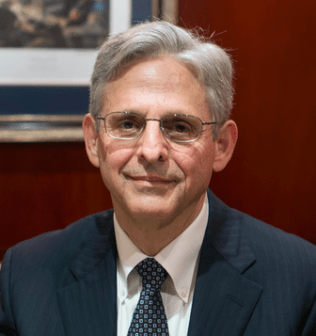
President Obama has tapped a moderate in Judge Merrick Garland, the Chief Judge of the U.S. Court of Appeals for the D.C. Circuit, for the U.S. Supreme Court vacancy left by the late Antonin Scalia. Here is a link to a video about Judge Garland posted on the White House website. Presidential politics may, however, stand in Garland’s way, as Senate Republicans have threatened to block any nominee, even from getting a hearing or vote.Judge Garland

Because the D.C. Circuit is often referred to as the second-highest court in the land, Judge Garland’s court opinions have been closely watched. Garland, nominated to the federal court of appeals by President Bill Clinton, has been viewed as a moderate left-of-center jurist, and has taken the side of business in quite a few high profile cases.

One example is Volks Constructors, an Occupational Safety and Health Administration case in which Judge Garland overturned the decision of the OSH Review Commission and concurred with the employer’s argument that OSHA’s six-month statute of limitations applies to injury and illness recordkeeping violations (making an inaccurate or incomplete OSHA log). OSHA had tried to impose a legal theory that inaccurate logs were a “continuing violation” that tolled the statute of limitations period for every day the log remained inaccurate. Judge Garland ruled that a recordkeeping violation occurs at a point in time when the recordkeeping entry was due to be perfected, it does not continue beyond that date, and OSHA may not cite beyond six months from that date. Judge Garland cautioned not to override his opinion, emphasizing:

“This does not mean, however, that the statute could not admit of a continuing violation theory under other circumstances.”

OSHA is working on a rulemaking to undo that decision.

President Obama selected Judge Garland as a moderate in what appears to be an effort to Continue reading